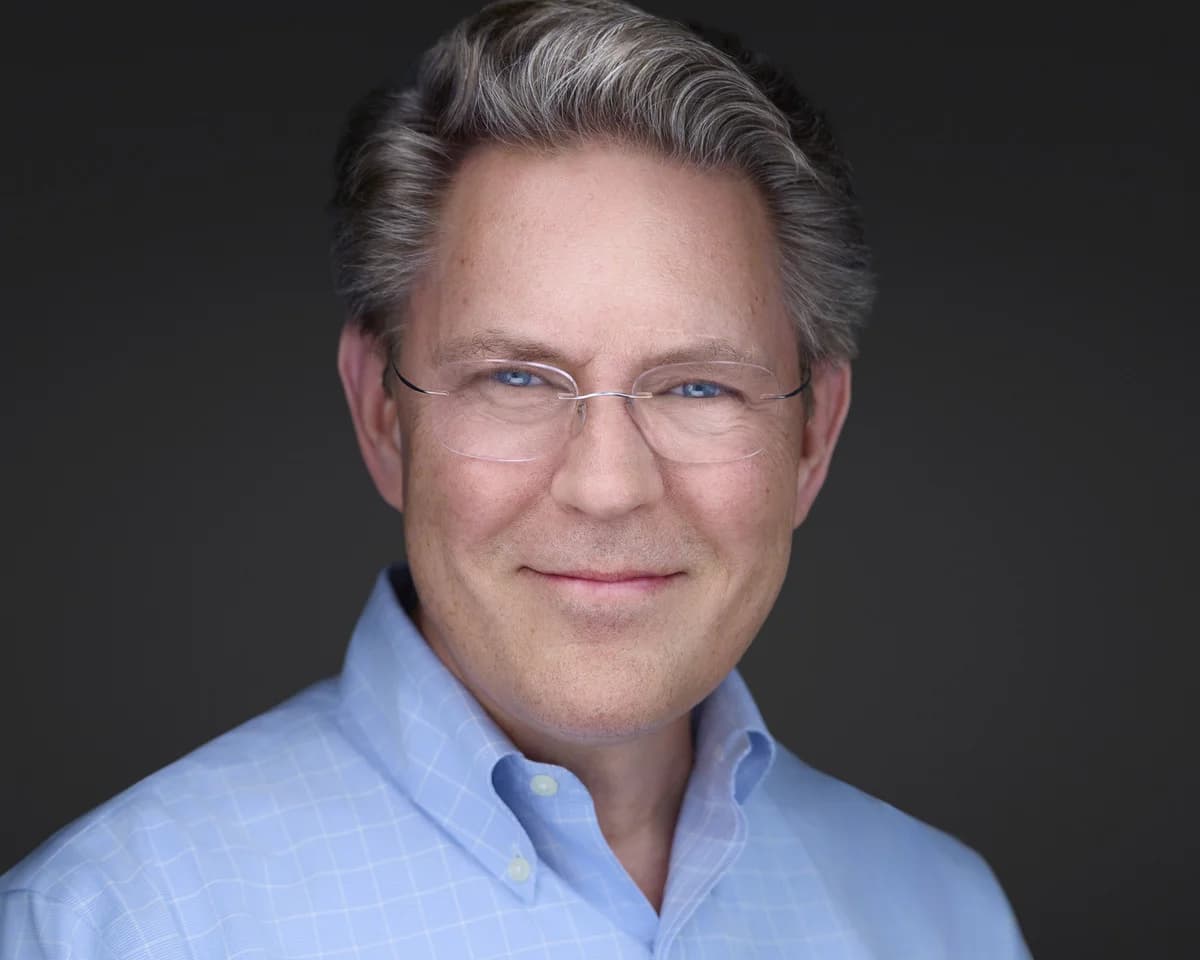
Damon Bates was 118 feet underwater when his breathing regulator started leaking air. He was diving a 150-year-old shipwreck in Lake Huron, and the cold fresh water was freezing the equipment. At that depth, you cannot bolt for the surface. You have to solve the problem down there.
His dive buddy was 30 feet away, lining up a photograph and not paying attention. Damon got his attention, got a spare regulator, and the two of them slowly made their way up in a cloud of bubbles as his tank drained itself dry.
Sitting on the boat afterward, catching his breath in the daylight, Damon had a realization. All of his training, all of his expensive gear, all of his practical wisdom as a newly certified dive master had been absolutely necessary. But it was not enough. He needed something more.
That realization became the foundation of his work as an executive coach. For the past decade, after more than 30 years as an executive in financial services, Damon has been helping senior leaders navigate the same kind of moment in their careers. The point where technical expertise gets you to a certain level and then stops working. Where knowing the answer is no longer enough, and leadership starts depending on how effectively you engage people, align them, and move them to act.
(Bianca Riemer explored the same turning point in why technical experts lose credibility in the boardroom.)
He and his team call that something more "executive presence." They spent years defining it, and they built a quantitative model to measure it. Their definition is precise: executive presence is the attributes of a leader, as viewed by others, that engage, align, and inspire others to act.
The key phrase is "as viewed by others." Not what you think about your own leadership. What everyone around you perceives. Your peers, your direct reports, your boss, your boss's peers. They are a little board of directors, and their perceptions of your behavior are what determine your influence.
Damon is quick to clear up a common misconception. Executive presence is not about how you look or how you dress. There is a small component of showing up appropriately for the role you play, but the model is built on 90 measurable behaviors, and appearance is a tiny fraction of it. The rest is about how you communicate, how you build trust, how you handle tension, and whether people feel moved to act after engaging with you.
This is where storytelling comes in. Not as a soft skill or a nice-to-have, but as one of the most powerful tools a leader can use to hit multiple dimensions of executive presence at once.
"We don't learn from experience," Damon said. "We learn from reflecting on experience. And until we've reflected on that and understood the significance of our experiences, there's no way we can apply those in a leadership setting."
Storytelling forces that reflection. It requires you to mine your own life for moments that changed how you think, and then shape those moments into something that serves your audience. Damon teaches a six-step structure for doing exactly that.
The first step is the setup. This is where you paint the picture. A cold morning on a beach. A car pulling up to a cottage in the rain. You are creating curiosity, giving your audience a reason to lean in.
The second step is the buildup. This is where tension starts to form. You are foreshadowing that something is about to go wrong. Humans love tension, and this is where you start to hook them.
The third step is the scene. This is the peak of the action. The regulator starts leaking. The car goes off the cliff. Whatever the central event is, this is where it happens.
The fourth step is the resolution. This is where you tell people what happened next. Damon warns that people frequently forget this step. They get so caught up in the drama of the scene that they leave the audience hanging.
If you stopped at step four, you would have a great dinner party story. Most people are reasonably good at those first four steps. It is the last two that transform a story from entertainment into leadership.
The fifth step is the personal lesson. This is what you personally learned from the experience. Not what anyone else learned. What you took away. And here is a critical principle: you want to be the village idiot of your own story, not the hero. Sharing failures and vulnerability is what builds trust.
The sixth step is the audience theme. This is where you turn your personal lesson outward and connect it to something your audience can use. This is why knowing your audience matters so much. If your theme does not land for the people in the room, the story was pointless.
Damon keeps all of his stories to three minutes. Beyond that, you exceed the average human's attention span. The hardest part is not finding stories. It is editing them down to only the important bits that serve the audience.
And finding stories is not as hard as people think. "If you're breathing, you've got stories," Damon said. He encourages leaders to build a story kit, a running collection of ideas captured in notes or voice memos the moment they come to mind. They do not have to be business stories. Personal stories are almost always more powerful because they carry vulnerability, and vulnerability is one of the strongest levers for building trust.
Damon also offered a piece of advice that has nothing to do with storytelling but everything to do with becoming a better leader. Ask your peers, your direct reports, and your leaders for advice on how you could be more effective. Not feedback. Advice. "People love to give advice," he said. "They hate to give feedback." Frame it as learning from their experience, and you will get far more honest and useful input than if you ask them to evaluate you directly.
The through-line of the entire conversation was a lesson Damon learned from an old boss in New York more than 20 years ago. The boss said it in the blunt, few-words style that New York is known for: "Who cares what you think? It doesn't matter what you think." What matters is what everyone else thinks. Leadership is not about you. It is about how others experience you and whether they are moved to act.
About Damon Bates
Damon Bates is an executive coach with more than 30 years of leadership experience in financial services, from Wall Street investment banks to major life insurance companies. His consulting firm developed one of the only quantitative, behavior-based models for measuring executive presence. He is also a dive master, underwater photographer, and former competitive cyclist.
Connect with Damon:
- Website: Damon Bates
- Photography: Damon Bates Photography
Listen to the Full Episode
Catch the full conversation on your favorite platform:
New episodes drop every week. Subscribe so you never miss a courageous conversation.
Learn more about the Speak Arizona team →
Speak Arizona is powered by District 3 Toastmasters, serving Arizona, southern New Mexico, and West Texas. New to all this? Learn how to get better at public speaking and find a club near you.