What Toastmasters Has Been, and What It Needs to Become
Toastmasters International has spent more than a century helping people find their voice. But the way people communicate today looks nothing like it did even ten years ago. Podcasts are shaping elections. Short-form video is replacing long-form presentations. AI is rewriting how professionals prepare, practice, and deliver. Virtual communities are competing with in-person connection for attention and time.
So the question isn't just what Toastmasters has been. The question is what Toastmasters needs to become.
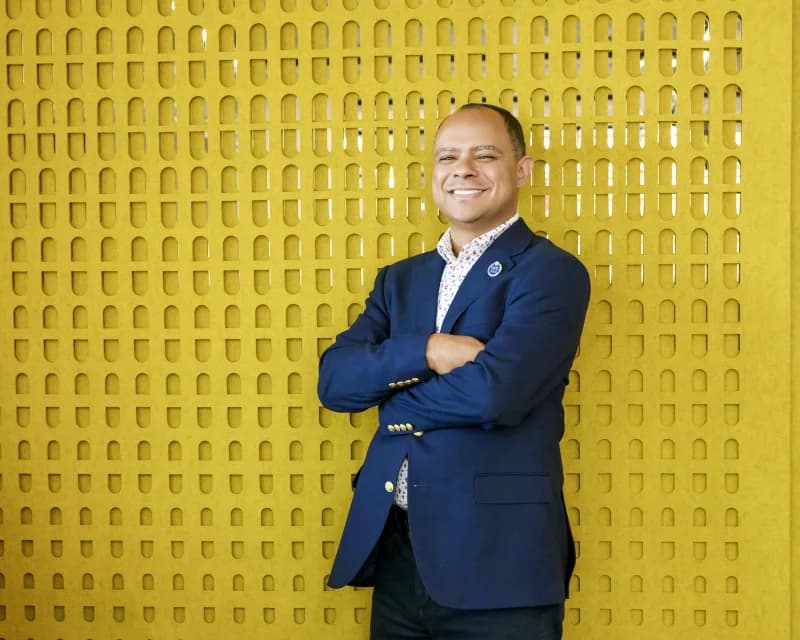
Stefano McGhee is stepping into that challenge. As the International President-Elect of Toastmasters International, he carries more than 20 years of service to the organization and a career in technology leadership as Senior Director of Technology Operations at Harvard Business Publishing. On this episode of the Speak Arizona Podcast, he sat down with host Rupesh Parbhoo for a conversation about service, leadership, confidence, volunteer culture, and the vision he carries for the year ahead.
Service Started With a Choice
Stefano's relationship with service didn't begin at Toastmasters. It started at the United States Air Force Academy.
As a freshman, the environment was brutal. He remembers hitting a point where everything felt like it was falling apart. His roommate said that when they got past it, he couldn't wait to do the same thing to the next group of people coming through. Stefano's reaction was the opposite. He said he would never do that to anybody else. There had to be a better way.
That instinct became the thread running through everything he's done since. When Stefano encounters something that isn't working, he doesn't just complain about it. He tries to fix it. And if he can't fix it, he makes sure people understand why it is the way it is. He describes it simply: see something that's broken, do something about it.
When friends and family asked him why he was running for the board and then for the presidency, his first answer was honest. He didn't know. He had to sit down with the people closest to him and work backward through his own story to understand what was driving him. That process of reflection is something he encourages every leader to do. You get caught up in the doing. You fall in love with the work or the organization. Taking a pause to have someone ask you simple questions about why can be one of the most meaningful things you do.
The Commander Who Changed Everything
One of the most powerful stories Stefano shared was about a military commander who kept him in service longer than he had planned to stay.
This commander would show up before everyone else and greet every person by name. He knew their spouses, their kids, whether they were looking for a new job, how things were going at home. He followed up on conversations from weeks and months before. People felt it. Not in a performative way. In a way that was genuine and consistent.
The result was extraordinary. When that commander needed something done on a weekend or late at night, people just did it. No questions. No resistance. Because he had given them the one thing that nobody can buy or manufacture: his time.
Stefano has carried that lesson into every leadership role since. His approach is always the same. Sit down with the people you work with. Find out what drives them. Ask why they're here and what they hope to get out of it. Then figure out how to help make that happen.
Rupesh connected deeply with this story. He shared a memory of his own father, who worked at a medical school and would memorize the photo and file of every incoming student so he could greet each one by name on their first day. No internet. No database. Just stacks of files and a commitment to making people feel seen before they even walked through the door.
Why Stefano Keeps Coming Back
After 20 years, the reason Stefano stays in Toastmasters is the same reason he started. Except it's not about him anymore.
In the beginning, like most members, he came for himself. He wanted to be a better speaker and maybe a better leader. That's a perfectly good reason to join. But at some point, the reason shifted. He started noticing what happened when he helped someone else. The person who didn't think they could give a speech gave one. The person who came in afraid of speaking left with something they didn't have before. That feeling of being part of someone else's growth became the thing he couldn't walk away from.
He puts it bluntly. He's selfish. Helping people succeed makes him feel good. Knowing he had a small hand in someone's transformation is the reward. And he says if you strip away all the noise around the organization and just focus on your interaction with another member who's trying to get ahead, trying to build the courage to do something they didn't think they could do, there's no way you walk away from that.
There's plenty of frustration in the world, he says. At your job. Everywhere. But in Toastmasters, you have a shot at changing somebody's life. Not as a cliché. Almost every time you show up.
The Biggest Challenges Ahead
Rupesh asked Stefano directly about the biggest challenges facing Toastmasters International. He didn't hold back.
The first is aging membership. The average age of members keeps going up, which raises a critical question: what is the organization doing, or not doing, to attract younger people?
The second is identity. Toastmasters has served two very different audiences for a hundred years. On one side, professionals looking to climb the corporate ladder. On the other, people around the world who may not have resources but are looking to pull themselves up and get ahead. Both groups have coexisted, but Stefano wonders whether the organization needs to make a clearer decision about who it is and who it serves in order to chart the path forward.
The third challenge is flexibility. Toastmasters has a strong culture of "this is the way we've always done it," but much of that isn't written down. It's tribal knowledge. And that actually creates enormous room for change. Could a speech be delivered as a podcast episode? Yes. Could a club meet in virtual reality with avatars? Someone already tried it. Could Rupesh get speech credit for the 20 podcast episodes he's recorded with feedback from his team? Stefano's answer was immediate. You're practicing public speaking in something that means something to you. As long as you get the feedback, yes.
The organization doesn't need to prescribe how people communicate. It needs to meet members where they are and stay agile enough to keep up with how communication is evolving.
The Vision: It All Happens at the Club
When asked what his vision is for his year as president, Stefano was honest about the reality. A year goes fast. There are limits to what any one leader can accomplish, especially in a large volunteer-driven organization. The grand structural changes aren't where the real impact lives.
His vision is focused on something more fundamental. He wants every club to understand just how much power it has.
People show up at a club because they want confidence. The club provides it. Not headquarters. Not the board. The club. The camaraderie. The fun. The environment where people get comfortable enough to fail hard in front of each other, hear "let's not do that again," and know they'll get another shot next week. That environment is what made Toastmasters successful for 100 years. It's what will carry it into the next hundred.
When you influence the people in your club, they go out into the world and do good. That's the core of the organization. Everything else is supporting structure.
What Nobody Else Can Offer
Stefano made a point that reframes the entire value proposition of Toastmasters. The organization offers something that just about everybody needs: confidence. And it delivers it in a way nobody else can match.
You can attend online courses. You can pay thousands or tens of thousands of dollars for a weekend intensive. Harvard has an executive speaking program that happens remotely. All of those options exist. But none of them put you in a room with real people, face to face, week after week, where you practice and get honest feedback in real time.
Toastmasters does that for 60 dollars every six months. As Stefano says, nobody can touch that.
Leading Volunteers
Rupesh raised a question he's been wrestling with himself: how do you lead people who aren't getting paid to be there?
Stefano's answer came back to the same principle. You have to spend time understanding why people show up. Without a paycheck as the incentive, the motivation is something internal and often different for every person. Your job as a leader is to figure out what that motivation is and help protect it.
That means asking questions. Why are you here? What do you hope to get out of this? How can I help make that happen? It also means recognizing that not everyone will buy into your vision. Some people won't be the right fit. But the ones who are will give you everything if they feel seen and supported.
It's a Toastmasters evaluation, Stefano says. You do it over and over. You recognize what's working, you offer what could be better, and you always keep the other person's goals at the center.
Know Your Material
Rupesh closed with rapid-fire questions, and one answer stood out. When asked for one piece of advice for a new public speaker, Stefano didn't hesitate. Know your material.
If you're talking about data, know the data. If you're talking about AI, show examples. If it's your first speech and you're talking about yourself, nobody in the audience can contest what you know about you. That's why the icebreaker speech exists. You are the world's foremost expert on your own story.
When you know your material and believe in it, most of the nervousness takes care of itself. That's not just advice for new speakers. That's advice for anyone who wants to lead with confidence.
Key Takeaways from This Episode
- See something broken, do something about it. Service starts with the choice to fix what's wrong instead of passing the same dysfunction to the next person.
- The leaders people remember are the ones who give them their time. Knowing names, families, and what drives someone is the foundation of trust.
- Toastmasters' biggest challenges are aging membership, identity, and the willingness to evolve how communication is practiced.
- Real impact lives at the club level. Headquarters and the board support the work, but the club is where confidence gets built.
- For 60 dollars every six months, no other program puts you in a room with real people getting real-time feedback. Nothing else compares.
- Leading volunteers means asking why people show up and protecting that reason. The motivation is internal, and it's different for every person.
- Know your material. When you know what you're talking about and believe in it, most of the nervousness takes care of itself.
About Stefano McGhee
Stefano S. McGhee, DTM, is the International President-Elect of Toastmasters International and Senior Director of Technology Operations at Harvard Business Publishing. He has served Toastmasters for more than 20 years and is a United States Air Force Academy graduate.