Want to Become a More Confident Speaker?
You're in the right place if you want to improve how you give a presentation, lead a meeting, raise a toast at a celebration, or simply feel more confident when you're networking.
Sound Familiar?
If Any of These Sound Like You, You're in the Right Place.
These are real reasons people give when they walk through the door of a Toastmasters club for the first time. Not polished mission statements. Just honest, human things people want to get better at.
I want to be more confident when speaking with someone about business topics. I get tongue-tied and stumble at times to say what I mean.
I would like to feel more confident in public speaking, or even in workplace conversations. I am a meek person.
More experience communicating effectively in meetings and being persuasive as a software engineer.
I'm practicing my keynote story. I'd love feedback and encouragement.
None of these people were “naturals.” They just decided they wanted to communicate better — and went looking for a place to practice. If you saw yourself in any of those sentences, keep reading.
How Do You Actually Get Better at Public Speaking?
You don't read your way to confidence, and you don't watch your way there either. Books, podcasts, and videos can change how you think about speaking — but the skill itself only grows when you actually stand up and do it.
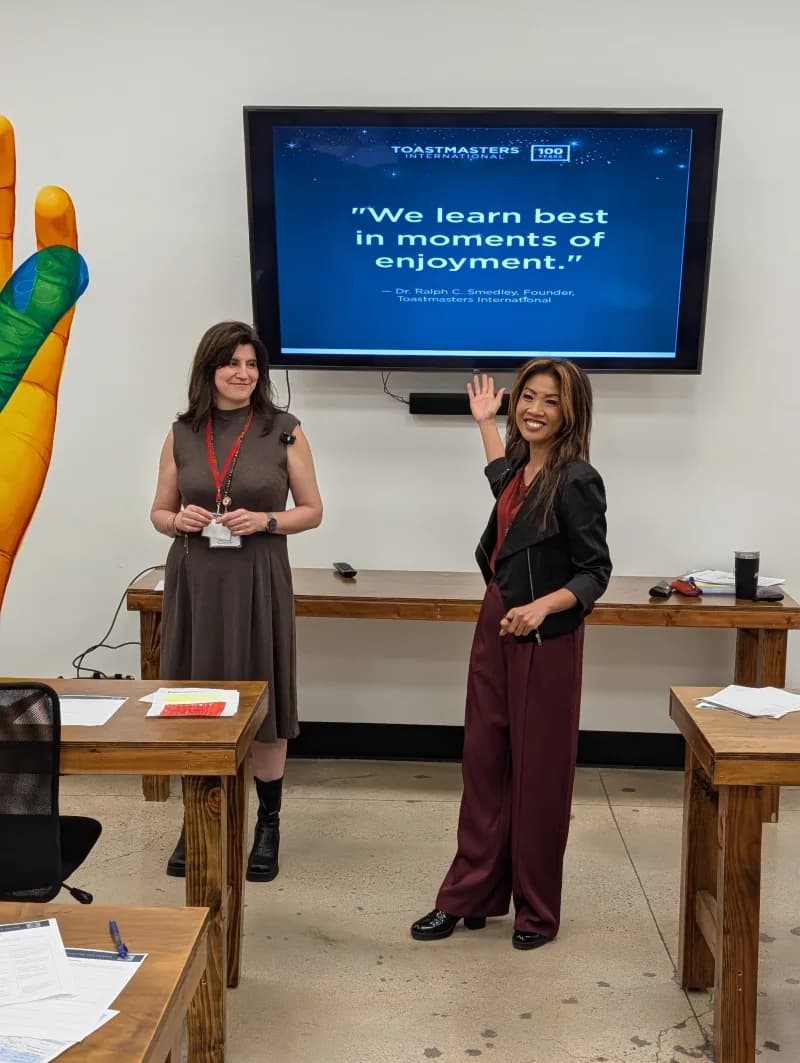
The people who improve the fastest all have the same four things in common:
1. A room where it's safe to be imperfect
You can't learn to speak well while terrified of being judged. Real growth needs a low-stakes setting where stumbling is expected and nobody's career is on the line.
2. Honest, specific feedback
“Good job” doesn't make you better. You need people who'll tell you what landed, what didn't, and exactly what to try next time.
3. Regular reps
Speaking once a year guarantees you'll always feel rusty. Speaking a little, often, is how nerves turn into instinct and confidence compounds.
4. People to learn from
Watching others tackle the same challenge — and cheering each other on — accelerates everything. You borrow what works and skip mistakes you'd otherwise have to make yourself.
I spent 15 years believing I couldn't speak to people. Toastmasters is where I learned that wasn't true.

Free Download
10 Tips to Look More Confident While Speaking
Inside the free guide:
- Why your racing heart almost never shows — and the simple shift that shrinks the nerves
- The posture, hands, and eye-contact habits that read as authority before you say a word
- How to steady your voice and pace so nerves don't give you away
- A science-backed visualization trick to rehearse confidence in your head before you ever stand up
Check your inbox to confirm, and your guide arrives right after. No spam, unsubscribe anytime.
It All Comes Together in a Toastmasters Club
That combination — a supportive room, honest feedback, regular practice, and people to learn from — is exactly what a Toastmasters club is built to provide. It's a small, friendly group that meets regularly so members can practice speaking, get coached, and grow at their own pace. No experience required, and you start wherever you are.
What Is Toastmasters?
Toastmasters International is a global nonprofit organization that helps people develop public speaking, communication, and leadership skills.
But here's what makes it different from a class or a seminar: Toastmasters is peer-driven. There's no instructor standing at the front of the room lecturing. Instead, members learn by doing — giving speeches, receiving feedback, leading meetings, and supporting each other in a space where making mistakes is not just okay, it's expected.
You don't need experience to join. You don't need to be “good at speaking.” You just need to show up willing to try.
Founded — over a century of communication training
Clubs around the world
Countries where Toastmasters is active
No instructors. Members learn from each other.
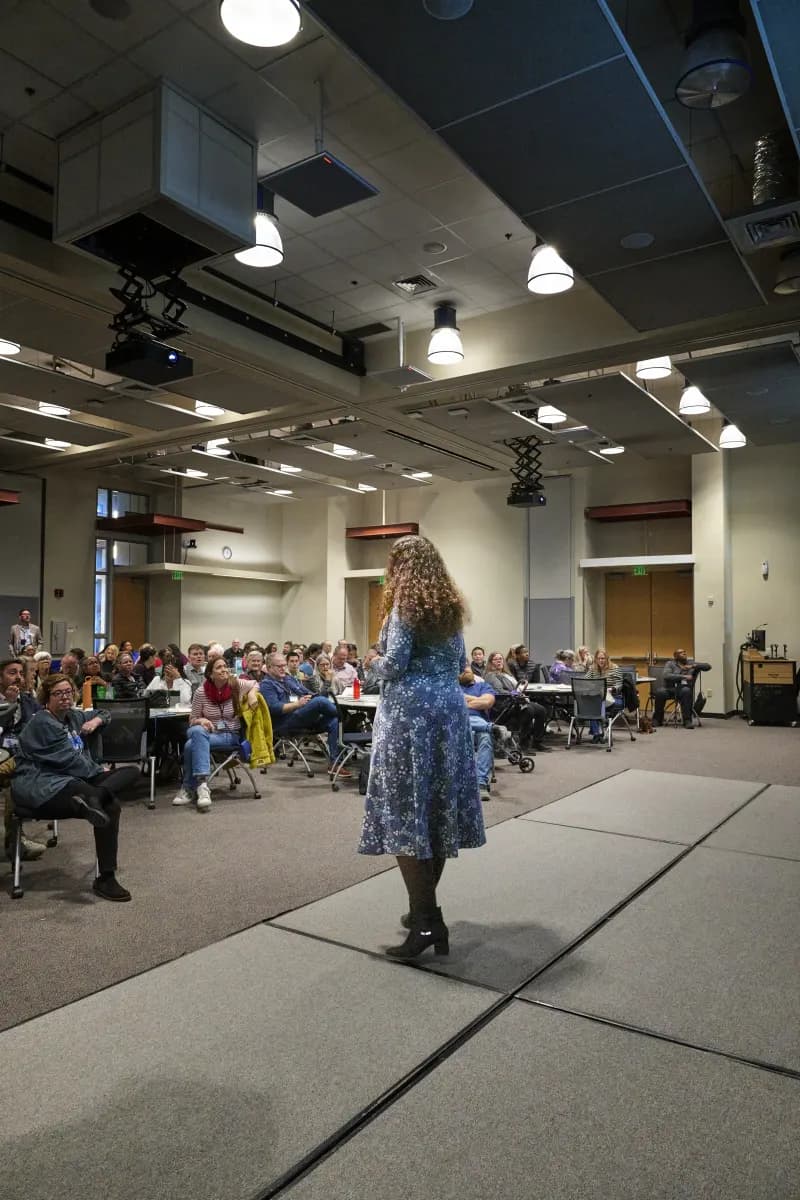
What Is District 3 Toastmasters?
District 3 is the regional arm of Toastmasters International, serving over 125 clubs across Arizona, southern New Mexico, and West Texas.
That means there's a club near you — whether you're in Phoenix, Tucson, Las Cruces, El Paso, or somewhere in between. Some clubs meet in the morning before work. Some meet at lunch. Some meet in the evening. Some are in person, some are online, and some are hybrid.
Every club has its own personality. Some are large and competitive. Some are small and intimate. Some lean corporate. Some are casual and community-driven. The best way to find your fit is to visit a few — every club welcomes guests, and your first visit is always free.
Here's What a Meeting Actually Looks Like
If you've never been to one, a Toastmasters meeting can feel like a mystery. In reality, most follow a friendly, predictable format built around three main parts:
Prepared Speeches
Members deliver speeches they've worked on ahead of time, each one designed to build a specific skill — from structuring a clear message to using vocal variety and body language.
Evaluations
After each prepared speech, another member offers constructive feedback — what landed, and a couple of specific things to try next time. Learning to give and receive feedback is a skill all its own.
Table Topics
A round of impromptu speaking, where you respond to a surprise question with no preparation. It's the part that sharpens your ability to think — and speak — on your feet, the same instinct improv is built on.
Throughout the meeting, other members take on supporting roles. A timekeeper tracks how long each person speaks, a grammarian highlights strong language and word choices, and an “Ah-Counter” keeps tally of filler words like “um” and “uh.” Every role — whether you're speaking, evaluating, or running the clock — is a chance to practice a different communication or leadership skill.
WHAT TOASTMASTERS CAN DO FOR YOU
People come to Toastmasters for a lot of different reasons. Here are some of the most common:
Build Confidence in Speaking
Whether it's a room full of strangers, a team meeting, or a one-on-one conversation with your boss, Toastmasters gives you a safe space to practice until the nerves shrink and the confidence grows.
Get Better at Work
Clearer communication on conference calls. More persuasive presentations. Stronger interview skills. The ability to lead a meeting people actually want to attend. These aren't abstract skills — they're the things that get you noticed, promoted, and respected.
Think Faster on Your Feet
Every Toastmasters meeting includes impromptu speaking exercises called Table Topics, where you practice responding to unexpected questions with no preparation. It's the closest thing to a gym for your brain when it comes to unscripted communication.
Tell Better Stories
Whether you're pitching a product, sharing a keynote, or trying to connect with a new team, storytelling is the skill that makes people listen. Toastmasters gives you the reps and the feedback to sharpen your stories until they land.
Meet People and Build Community
Toastmasters is one of those rare spaces where you're surrounded by people who are all working on themselves. That shared vulnerability creates connections that go way beyond networking.
Develop Leadership Skills
Every club is run entirely by its members. That means real leadership opportunities — running meetings, mentoring newer members, managing club operations, organizing events — all in a low-risk environment where you can experiment and grow.
Find a Toastmasters Club Near You
The best way to get better is to take the first step. Visit District 3 Toastmasters to see what a club can do for you — and find one you can visit, as a guest, with no pressure to join.
EXPLORE DISTRICT 3 TOASTMASTERSPublic Speaking Questions, Answered
You get better at public speaking the same way you get better at anything — by doing it, regularly, in front of people who give you honest feedback. Reading and watching videos help, but real growth comes from repetition in a low-stakes setting where it's safe to be imperfect. That's exactly what a Toastmasters club gives you: a supportive room, a chance to speak every week, and feedback you can actually use.
The fear rarely disappears overnight, but it shrinks fast with exposure. Each time you stand up and speak and survive, your brain updates its sense of what's actually at risk. The trick is to start somewhere the stakes are low and the people are on your side — not on a conference stage. A weekly practice group is one of the most reliable ways to turn that fear into manageable nerves, and eventually into confidence.
Not at all — most people walk in because they're not yet confident speakers, and that's the whole point. You'll find first-time presenters, people who get tongue-tied in meetings, and seasoned speakers polishing a keynote, all in the same room. You start wherever you are and grow from there at your own pace.
District 3 Toastmasters has clubs across Arizona — in Phoenix, Gilbert, Mesa, Scottsdale, Tempe, and many other communities — plus southern New Mexico (including Las Cruces) and West Texas. Most clubs welcome guests to visit a meeting for free before deciding to join, so you can see how it works with no pressure. Visit the District 3 Toastmasters website to find a club near you.
Speak Arizona is the podcast powered by District 3 Toastmasters. The podcast brings you conversations with world-class speakers and coaches; Toastmasters is where you go to actually practice the skills those conversations talk about. Listening makes you think differently about communication — joining a club is how you build the habit.
Your Voice Is Worth Working On
The hardest part is walking through the door the first time. Find a District 3 Toastmasters club near you and visit as a guest — no pressure, no cost.
FIND A CLUB NEAR YOU