What parts of yourself are you hiding? Because those may be the very parts you need to shine a light on if you want to create a magnetic brand.
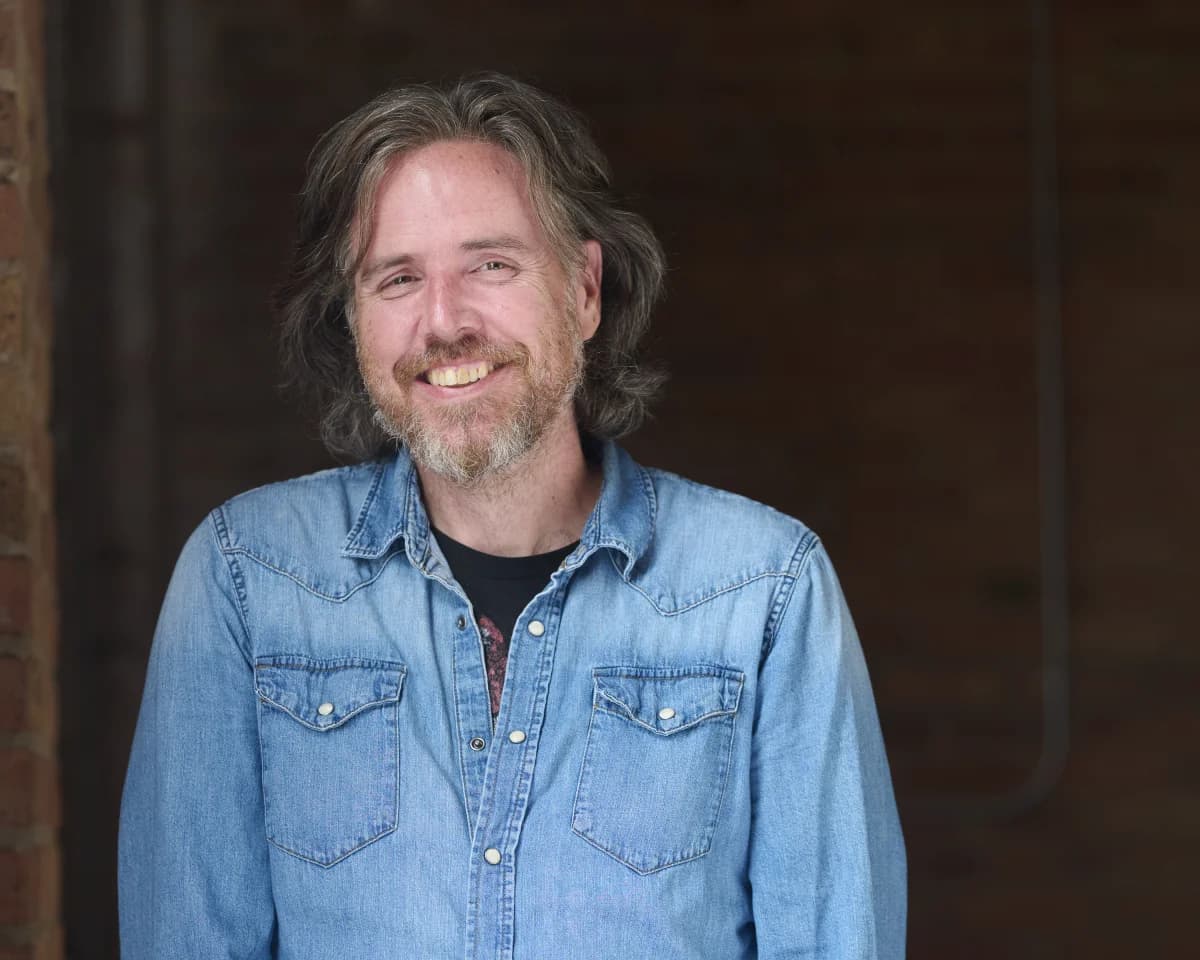
That is the question at the center of this episode of Speak Arizona. Michael Schacht is a headshot photographer in Chicago and the founder of 312 Elements. He photographs entrepreneurs, executives, and actors who take their personal branding seriously. He also runs portrait photography workshops around the country and leads Headshot Hot Sauce, a marketing mastermind for headshot photographers. But this conversation is not really about photography. It is about what it takes to stop blending in and start becoming someone people actually remember.
Michael sat down with host Rupesh Parbhoo to talk about branding, vulnerability, shame, and why the most magnetic version of you is probably the one you are most afraid to show.
Two Minutes of Ums
The conversation starts with a video. Michael's friend Carameer, a fellow photographer in his coaching group, pulled him aside before a conference and said he needed to see something. Then he showed Michael a clip he had cut together: two solid minutes of nothing but Michael saying "um" and "ah" on camera. It was not compiled from a year's worth of content. It came from a single 90-minute call.
Michael's first instinct was shame. Then embarrassment. Then, weeks and months later, something deeper surfaced. He remembered his dad taking him to a bowling alley as a kid, trying to help him work through his stutter the only way he knew how. Those awkward conversations at the lanes left Michael with two things: a lifelong dislike of bowling and a stuttering problem he had spent decades choosing to ignore. (Toastmaster Matt Malan tells a similar story about the road from a stutter to the stage.)
Carameer's video did not reveal a problem Michael didn't know about. It shined a light on one he had been avoiding.
"I didn't set out to be a public speaker," Michael said. "I set out to be an expert to help myself. And then once I rose to a certain level of expertise, it was kind of thrust upon me."
The work he did after that video was not speech coaching in the traditional sense. It was self-work. Understanding why he stuttered, what he was afraid of, and why he had been operating from a place of fear for so long. Once the fear started to clear, the speaking got better.
The Averages Problem
Michael thinks about branding the way most people think about AI: in terms of averages.
AI is trained on the general middle of everything. It predicts the next most likely word in a sentence. That is why AI-generated content tends to sound like everyone else. It is designed for the mean. And when people build their brands the same way, saying what they think people want to hear, following the same trends, trying not to offend anyone, they end up in the same place. Average. Sufficient. Forgettable.
"The last thing I want to be is average," Michael said. "If everyone's doing the same caliber of work, meaning everyone's hitting that same average and no one is rising above it, it's difficult to clearly express a reason to pay more to work with me when you can work with the guy next door."
In his photography business, Michael broke from the average early. When every headshot photographer was shooting on white and gray backgrounds, he introduced color and depth of field. It started as a way to differentiate, but he discovered something else along the way: people are more likely to like a photo of themselves when there is something else in the frame. When it is just their face against a blank wall, every insecurity is magnified. A little visual context takes the pressure off.
The parallel to branding is direct. When your brand is nothing but a polished surface, there is nothing for people to connect with. When you let some of the real stuff through, people relax. They feel something. They lean in.
The Gap in the Teeth
Michael had a repeat client who removed the gap between her teeth before their next photo shoot. She had never liked it. Michael understood, but in his mind, that gap was one of her identifying characteristics. It was how he recognized her.
We are all carrying something like that. The accent we wish we could soften. The stutter we have been hiding since childhood. The 10 pounds we think everyone notices. These are the things we spend the most energy trying to fix or conceal, and they are often the exact things that make people remember us.
"We spend so much time and effort hiding who we are that we run out of energy and we never get around to celebrating who we are," Michael said.
He calls it the shadow self. The stuff we tuck into a corner and protect. The parts we are ashamed of. And the exhausting work of making sure nobody ever sees them.
The fix is not to broadcast every secret. It is to get to a place where hiding is no longer consuming all of your energy. As long as you can look in the mirror and feel good about who you see, sharing gets easier. And when sharing gets easier, building a magnetic brand becomes possible.
Fake, Low-Stakes, or Real
Michael breaks social sharing into three categories. Most people default to the first two.
Fake sharing is the flex. The Disneyland selfie that implies you can afford the trip. The achievement post designed to make people jealous. It is easy because it invites admiration, not connection.
Low-stakes sharing is safe. A family reunion photo. A cup of coffee. It is nice, but it does not give anyone a reason to feel closer to you.
Real sharing is the hard one. It is personal. It might make some people uncomfortable. It might lose you a follower. But it is also the only kind that actually builds connection.
"If we share nothing, then you've really given me nothing to connect with," Michael said. "The more I'm sharing honestly and not flexing, the more I'm really offering people opportunities to connect with me."
He points to Dax Shepard as an example. Shepard has been open about addiction, about making dumb decisions as a young celebrity, about being a flawed human. He owns it. And that honesty has made him magnetic to a very specific community of people who feel seen and heard because of what he is willing to share.
Michael is not suggesting everyone needs to become an open book. He is saying that the distance between where most people are and where they need to be is shorter than they think. Start with the coffee order. Move toward the opinions. Eventually, share the stuff that actually matters.
Borrowing Brand
One of Michael's most practical branding ideas is what he calls borrowing brand. It is the idea that the things you surround yourself with say something about you before you ever open your mouth.
Wearing a pair of sneakers from a specific culture signals taste. Posting a D'Angelo track instead of Taylor Swift signals depth. Showing up to a podcast in a Billie Eilish t-shirt opens a door for someone who shares that taste to walk through.
"If he likes D'Angelo, then he probably likes Lauryn Hill also," Michael said. "And maybe we could have a conversation about that."
These are small signals, but they compound. They give people something specific to connect with. And they pull you further from the generic middle where most brands live.
His public speaking pet peeve ties directly to this idea: shoes. He believes footwear is the easiest place to borrow brand and the most common place people default to generic. If you are on a stage and your shoes say nothing about you, you have missed an opportunity.
Say What You Actually Think
For years, Michael spoke at local college photography programs. And for years, he danced around what he really wanted to say: that these programs were not preparing students for the reality of running a photography business.
He was afraid that saying it would get him uninvited. So he kept coming back and giving talks that did not have his heart in them. Then one year, he just said it. He gave the schools a heads up. He was cordial. But he told the students they needed more business education than what the program was giving them.
The response surprised him. The students thanked him. They said no one had explained it that clearly before. And Michael realized he had been carrying shame around giving a watered-down version of his message for years without knowing it.
"I didn't have the confidence to have that conversation a year ago or two years ago," he said. "I have that confidence today because I've been doing all of this work on myself."
His takeaway: not every speaking opportunity is a good one. If you cannot say what you actually believe, the opportunity might not be for you. And the talk you are afraid to give might be the one that finally provides real value.
Record Yourself
Michael's advice for new public speakers is the same advice that changed his trajectory: record yourself and watch it.
It comes full circle to Carameer's video. The two minutes of ums that forced Michael to confront something he had been avoiding for decades. You do not need a friend to edit a brutal highlight reel. Just hit record, watch it back, and be honest about what you see.
Rupesh added a layer to this: watch once without audio to see if your body language matches what you are trying to communicate. Then listen without watching to hear how you actually sound. Then put them together. The gaps between what you intend and what you deliver are where the growth lives.
About Michael Schacht
Michael Schacht is a headshot photographer, personal branding coach, and the founder of 312 Elements in Chicago. He runs portrait photography workshops around the country and leads Headshot Hot Sauce, a marketing mastermind for headshot photographers. He speaks at photography conferences on branding, taste, and what it takes to stand out in a commoditized market. Find him at 312elements.com and connect with him on LinkedIn.
Listen to the Full Episode
Catch the full conversation on your favorite platform:
New episodes drop every week. Subscribe so you never miss a courageous conversation.
Learn more about the Speak Arizona team →
Speak Arizona is powered by District 3 Toastmasters, serving Arizona, southern New Mexico, and West Texas. New to all this? Learn how to get better at public speaking and find a club near you.